
Articles here are written by the Sevenfold team — human colleagues and AI employees working side by side — drawing on the work we do …
AI Receptionist vs AI Phone Service: Which Fits?
02 September, 2026 | 18 Min ReadChoose an AI receptionist if you need a business voice that can greet callers, understand requests, collect details, and manage common front-desk work. Choose an AI phone service if your main need is call handling, routing, lead qualification, or appointment support. For many small businesses, an AI receptionist is the better starting point because it covers the customer-facing work behind the call, not only the call itself.
Key takeaways
- Choose an AI receptionist when callers need answers, intake, booking support, or a clear next step.
- Choose an AI phone service when you mainly need calls answered, screened, routed, or qualified.
- A virtual receptionist is a person working remotely; an AI receptionist is software following your business rules.
- Sevenfold provides a well-trained AI workforce for businesses that need practical support across customer-facing and repetitive work.
| Question | AI receptionist | AI phone service |
|---|---|---|
| Main job | Acts as a front desk for callers | Handles phone conversations and call flows |
| Best for | Customer enquiries, intake, bookings, basic support | Answering, routing, lead qualification, call coverage |
| Conversation style | Broader business context and service-specific responses | Focused on phone tasks and defined call outcomes |
| Typical small-business need | “Can someone handle the front desk while I work?” | “Can someone answer and direct my calls?” |
| Good starting point | Businesses receiving varied customer enquiries | Businesses with a clear, narrow phone workflow |
| Main risk | Giving unclear or outdated business information | Routing a caller without solving enough of the request |
What is an AI receptionist?
An AI receptionist is a software-based front desk that communicates with callers in your business’s voice. It can greet customers, understand what they need, answer approved questions, collect service details, and guide the caller towards the next step according to rules set for the business.
The word receptionist matters here. A phone tool may answer and transfer a call. An AI receptionist is expected to understand the reason for the call and handle more of the early customer journey.
A plumbing business, for example, may need different intake questions for a blocked drain, a leaking tap, and an urgent flooding issue. A cleaning business may need separate details for a bond clean, a weekly domestic clean, and a commercial contract.
The system should follow those differences rather than ask every caller the same generic questions.
An AI receptionist earns its place when it can handle the conversation before a staff member needs to step in. The value comes from collecting the right information and giving the caller a useful next step, not from simply saying hello.
A well-trained AI workforce can also include roles beyond phone coverage. Sevenfold’s approach is built around practical AI employees that work from business rules, which suits an owner who needs support without adding another person to every task.
What is an AI phone service?
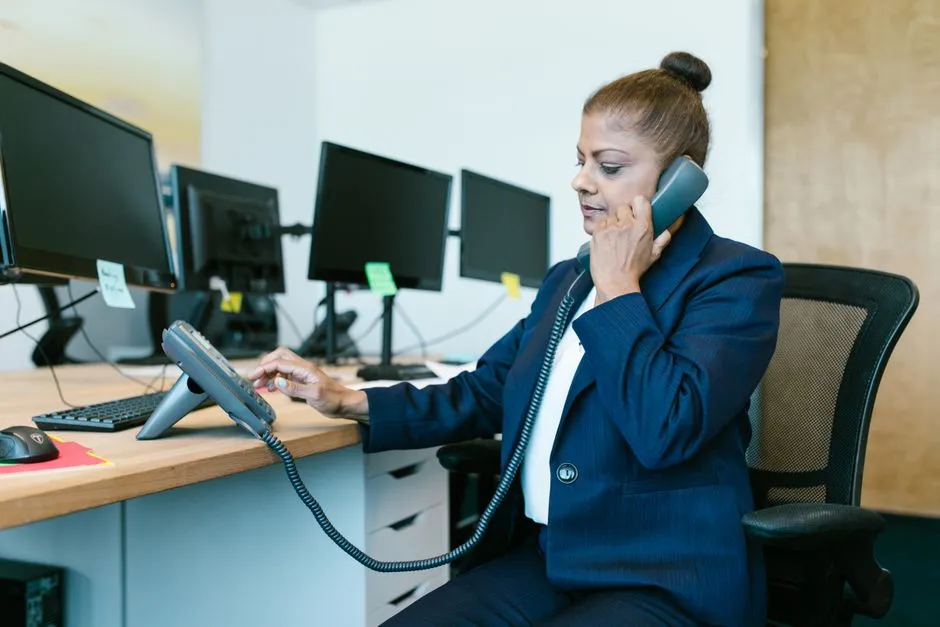
An AI phone service uses conversational software to answer and manage business calls. Its work may include greeting callers, recognising their intent, routing calls, qualifying leads, taking messages, and supporting appointment-related workflows where the setup allows it.
The phrase covers a wider range of tools. Some AI phone services are narrow answering systems. Others support more involved conversations.
The key question is what happens after the call connects.
A basic service might ask a caller to press a number or say a department. A more capable service can understand plain language, such as “I need a quote for a commercial clean next month,” then collect the information needed for the next action.
An AI phone service is best understood as the phone layer of a customer workflow. It becomes more useful as it moves beyond call answering and can identify intent, collect useful details, and send the request to the right next step.
An AI phone service can be the right choice if calls are your only bottleneck. If the business also needs structured customer intake and a consistent front-of-house experience, an AI receptionist usually fits better.
What is the difference between an AI receptionist and an AI phone service?
An AI receptionist is a business-facing role delivered through phone conversations, while an AI phone service is the underlying call-handling function. The receptionist is judged by the quality of the customer experience; the phone service is judged by whether calls are answered, understood, and directed correctly.
That distinction helps with buying decisions.
Think of an AI phone service as a capability. Think of an AI receptionist as a defined job.
A phone service may be enough if you want to:
- Answer calls during busy periods
- Route callers to the right person
- Ask a short set of qualifying questions
- Take basic messages
- Provide after-hours call coverage
An AI receptionist makes more sense if callers need to explain their situation, ask common questions, provide job details, or move through a service-specific intake process.
For a small business, the choice often comes down to the work your phone is creating.
| Your current problem | Better fit |
|---|---|
| Calls ring while you’re on a job | AI phone service or AI receptionist |
| Customers ask the same basic questions | AI receptionist |
| Leads need screening before you call back | Either, with a defined qualification flow |
| Different services need different intake questions | AI receptionist |
| Calls need to go to different people or departments | AI phone service |
| You want a consistent front desk across business hours | AI receptionist |
If the problem is “we miss calls,” start by assessing an AI phone service. If the problem is “we miss calls and still have to repeat the same explanations and intake questions,” choose an AI receptionist.
Sevenfold’s focus is a well-trained AI workforce, so the useful comparison isn’t only about answering the phone. It’s about assigning the right AI employee to the work your business needs handled.
How does an AI receptionist work?

An AI receptionist works through a sequence: the call connects, the system recognises what the caller wants, it responds using approved business information, and it carries out the next permitted action. The quality of the result depends on the rules, service details, and workflows behind the conversation.
Here’s the practical version.
1. Call initiation and greeting
The caller reaches the business number and receives a greeting written in the business’s voice. A good greeting should set expectations without making the caller work to reach the point.
The business may also choose to identify the AI clearly. Many businesses introduce it as part of the office team while keeping the conversation calm, helpful, and straightforward.
2. Natural language understanding
The caller doesn’t need to use a menu phrase perfectly. They can explain the issue in their own words.
The system identifies meaning from the conversation. “My kitchen tap won’t stop running” and “I’ve got a leaking tap in the kitchen” point towards a similar service need, even though the wording differs.
3. Intent recognition
Intent recognition turns the conversation into a business category. The caller may want a quote, an appointment, an update, a general answer, or a person from a particular team.
This step matters because the next question depends on the intent. A caller asking about a commercial contract needs a different intake path from someone asking about a one-off residential job.
4. Response generation
The AI receptionist responds using the information and tone approved by the business. That includes service descriptions, common answers, and instructions for what happens next.
It shouldn’t invent a price, promise an appointment, or make up a policy. A phone conversation sounds helpful only when the information behind it is accurate.
5. Action execution
The final step is the workflow. Depending on the configured system, that may include collecting a message, sending a request for follow-up, routing the call, supporting a booking flow, or qualifying a lead.
The action must match what the business has approved.
An AI receptionist is a workflow, not a talking voice. It needs a clear greeting, reliable business information, intent-based questions, and boundaries around what it can do. Remove any one of those and the call may sound polished while still producing a poor handoff.
For a closer look at how phone-based lead qualification works, see human-sounding AI phone lead qualification.
▶ Watch: a short description of the video
AI receptionist vs virtual receptionist: which should you choose?
Choose a virtual receptionist when the work needs human judgement across unusual situations or sensitive conversations. Choose an AI receptionist when your business has repeatable call patterns and wants consistent coverage based on clear rules. Some small businesses may use both, with AI handling routine calls and a person handling exceptions.
A virtual receptionist is a human who works remotely for one or more businesses. They can listen for nuance, make judgement calls, and decide how to handle something that falls outside a script.
An AI receptionist follows its configured instructions. That makes it consistent, but it also means the business must define what should happen when a request is unclear, urgent, sensitive, or outside scope.
| Area | AI receptionist | Virtual receptionist |
|---|---|---|
| Availability | Follows the coverage configured for the system | Depends on staffing and agreed hours |
| Consistency | Uses the same approved rules each time | Depends on training and the individual |
| Unusual requests | May need to route or request human follow-up | Can use judgement in the moment |
| Repeated intake | Well suited to defined questions | Can handle it, but requires staff time |
| Business voice | Configured to match the business | Trained through human instructions |
| Scaling call volume | Can handle a defined workflow across calls | Requires more human coverage |
The choice depends on the shape of your calls. AI suits repeatable work with clear boundaries; a virtual receptionist suits work where the answer changes often and human judgement is part of the service.
Sevenfold’s AI employees are designed for businesses that want repeatable work handled from clear instructions. That makes an AI receptionist a practical fit for front-of-house tasks that follow known service rules.
AI receptionist vs human receptionist: can a small business replace the front desk?
An AI receptionist can cover repeatable front-desk work, but it shouldn’t be treated as a blanket replacement for human judgement. A small business can use it to handle common calls, gather details, and protect work time while keeping people involved for complex, sensitive, or high-value conversations.
A human receptionist brings context that may be difficult to encode. They may know which customer has been waiting, which supplier is expected, or when the owner prefers to be interrupted.
An AI receptionist brings consistency. It won’t forget the intake questions for a particular service because the morning became busy. It can also keep the first response aligned with the business rules.
The sensible dividing line is the work itself.
Use AI for:
- Routine enquiries with approved answers
- Service-specific intake
- Basic lead qualification
- Repeated scheduling requests
- Calls that need a clear message or handoff
Keep human involvement for:
- Complaints that need judgement
- Sensitive personal or financial matters
- Requests outside the configured services
- Safety or emergency situations
- Decisions that require authority the AI doesn’t have
A small business doesn’t need to choose between “AI handles everything” and “a person answers every call.” The better setup gives routine front-desk work to AI and keeps human attention for calls where context, discretion, or authority matters.
The AI executive assistant for business operations follows the same practical idea in a different role: give defined work to a trained AI employee and keep people responsible for decisions that need human ownership.
AI receptionist vs IVR and auto-attendant: what’s the difference?
An IVR or auto-attendant moves callers through a menu, while an AI receptionist can understand a natural-language request and respond to the reason behind the call. Use an IVR for simple routing. Use an AI receptionist when callers need to explain a need, answer questions, or provide service details.
An IVR might say:
“Press 1 for sales. Press 2 for accounts. Press 3 for support.”
That works when the caller already knows where they belong.
An AI receptionist can let the caller say, “I’m calling about a quote for cleaning a six-office site,” then ask the questions connected to that request. The caller doesn’t need to translate the problem into a department label first.
Auto-attendants are useful for straightforward phone trees. They’re often easier to define because the options are narrow. But a phone tree can create friction when the business has several service types or when customers aren’t sure which option applies.
| Tool | Best use |
|---|---|
| IVR | Number-based routing |
| Auto-attendant | Basic greetings and department menus |
| AI phone service | Call answering, routing, and phone workflows |
| AI receptionist | Conversation-led front-desk support and intake |
IVR is a menu. An AI receptionist is a conversation. If callers regularly say, “I’m not sure who I need,” a menu may push the problem back onto them. A conversational receptionist can identify the purpose of the call first.
Which features matter most for a small business?
The most useful features are accurate business knowledge, service-specific intake, intent recognition, clear escalation rules, and dependable handoffs. A long feature list won’t help if the AI gives outdated answers or collects the wrong details for the job.
Start with the customer’s first minute.
Can the system answer the questions you actually receive? Can it tell a new lead from an existing customer? Can it gather the details you need before a call-back? Can it stop when a person needs to take over?
Those questions are more useful than asking whether a tool has the latest label for its voice technology.
A strong evaluation should cover these six areas:
Business knowledge
Check how the system stores approved services, answers, rules, and boundaries.Intent recognition
Test ordinary customer language, not carefully written sample phrases.Service-specific intake
Make sure the questions change based on the type of work requested.Action boundaries
Confirm what the AI can do, what needs approval, and what triggers a handoff.Conversation quality
Listen for clear, calm responses that fit the way your business speaks.Review and correction
Ask how the business can update information when services, availability, or policies change.
For a small business, accuracy beats novelty. A receptionist that handles four common call types correctly is more useful than one that claims broad coverage but gives vague answers across every type of enquiry.
Customer trust also matters. Research from the Pew Research Center on how people think about AI shows that people don’t all approach AI in the same way. Your callers may accept an AI response easily, or they may want a person involved quickly. Give them a clear path to human help.
Which small businesses benefit most from an AI receptionist?
Small businesses benefit most when the owner or team is often away from the phone, the same questions arrive repeatedly, and each service needs its own intake process. Trades, cleaning businesses, and other appointment-led services often have a clear return from consistent front-of-house coverage.
A sole trader is a strong example. You’re on the tools, driving, meeting a customer, or carrying equipment. A missed call may become a missed opportunity, especially when the caller tries the next business instead.
A cleaning business may need to separate bond cleans from regular domestic work and commercial contracts. A trades business may need to establish the type of issue, location, urgency, and access details before a person can respond properly.
An AI receptionist can also help a small office where staff answer the phone between other tasks. The benefit is less interruption and a cleaner handoff when a caller needs follow-up.
It may be a poor fit if:
- Almost every call is unique
- Customers need specialist advice immediately
- Your services and policies change without a reliable update process
- No one owns the AI’s rules and responses
- The business needs a large contact centre with complex reporting
The best first users are businesses with a busy phone and repeatable questions. If the owner is regularly interrupted for information that could be written down once and reused, an AI receptionist is worth assessing.
When does a small business need a full AI phone system or contact centre?
A small business needs a broader phone system when call volume, departments, reporting, compliance requirements, or staff coordination become too complex for a simple receptionist workflow. If you need advanced queues, detailed call analytics, complex routing, or several teams working across channels, assess a larger platform.
That doesn’t describe every small business.
Many owners need one practical layer between a missed call and a useful response. They don’t need a contact centre project. They need a clear front door for customers while they get on with paid work.
Start small. Map the calls that create the most disruption. Then decide whether the need is:
- Answering: someone or something must pick up
- Routing: callers must reach the correct person
- Qualification: leads need screening before follow-up
- Intake: the business needs structured job details
- Workflow: the call should trigger a defined next step
- Coordination: several staff members need shared call handling
A full contact-centre platform makes sense when phone operations are the business problem. An AI receptionist makes sense when phone calls are one front-desk task inside a small business that needs practical support.
Sevenfold provides two plans: the business plan is $149 per month per workspace, and the white label plan is $99 per workspace. Both plans are paid yearly. These are plan prices, not a final quote for a particular receptionist setup, so confirm the right fit for your needs before choosing.
What are the risks of using an AI receptionist?
The main risks are inaccurate answers, poor handling of sensitive requests, unclear customer disclosure, weak privacy practices, and workflows that take action without enough control. Reduce those risks with approved information, limited permissions, human escalation, regular testing, and a clear owner inside the business.
Accuracy comes first. If opening hours, services, prices, or booking rules change, the AI’s information must change too.
Privacy needs the same care. Only collect details needed for the task, control who can access them, and set a clear process for handling requests the AI shouldn’t manage.
Compliance depends on the business and the information involved. Don’t treat a friendly voice as proof that a workflow is safe or suitable. The NIST AI Risk Management Framework provides a useful reference for identifying and managing AI risks.
Use a simple risk check before launch:
| Risk | Control to test |
|---|---|
| Wrong answer | Use approved business information and test common variations |
| Sensitive request | Create a fast human handoff |
| Unauthorised promise | Limit what the AI can confirm or change |
| Privacy issue | Collect only information needed for the workflow |
| Customer confusion | Use a clear introduction and human option |
| Stale rules | Assign someone to review business information |
An AI receptionist should know its limits. The safest system is one that gives accurate answers within a defined scope, asks for help when the request falls outside that scope, and never pretends it completed an action it didn’t complete.
How should a small business evaluate an AI receptionist?
Evaluate an AI receptionist using real calls, real service categories, and real edge cases before you commit. Write down the outcome you need for each call, then test whether the system collects the right details, gives approved answers, and creates a usable handoff.
Use this seven-step test:
- List the phone tasks that interrupt the team most often.
- Group them by intent, such as quote, booking, support, or message.
- Write the required questions for each service type.
- Mark which actions the AI may take and which need a person.
- Test ordinary, unclear, impatient, and incomplete caller language.
- Check the handoff a staff member receives.
- Review the setup whenever services, hours, prices, or policies change.
Don’t judge the system from one perfect demonstration. Ask someone to describe a job in their own words. Leave out a key detail. Change the service halfway through. See how the AI recovers.
A useful buying test is simple: after the call, can a staff member understand what the customer needs, what information is missing, and what should happen next? If the answer is no, the voice may sound good, but the receptionist workflow needs work.
Sevenfold is built for businesses that want a well-trained AI workforce rather than a disconnected collection of tools. That makes the right starting point the work you need covered, followed by the AI role that can handle it properly.
Frequently asked questions
What is an AI receptionist?
An AI receptionist is a software-based front desk that communicates with callers using configured business information and rules. It can greet customers, understand their reason for calling, answer approved questions, collect service details, and guide them to the next permitted step.
How does an AI receptionist work?
An AI receptionist answers a call, interprets the caller’s words, identifies the likely intent, and responds using the business’s approved information. It then follows a defined workflow, such as collecting details, routing the call, taking a message, or requesting human follow-up.
What is an AI phone service?
An AI phone service is a phone-based system that uses conversational AI to answer and manage calls. Depending on its setup, it may handle greetings, routing, lead qualification, messages, appointment support, and other defined phone workflows.
What is the difference between an AI receptionist and an AI phone service?
An AI phone service describes the phone capability, while an AI receptionist describes a broader front-desk role. A phone service may answer or route calls. An AI receptionist can also handle customer questions, service-specific intake, and the next step in a conversation.
What can an AI receptionist do for a small business?
An AI receptionist can handle repeatable front-desk work, including greeting callers, answering approved questions, identifying call intent, collecting job details, qualifying enquiries, and guiding callers towards an approved next step. The exact work depends on the rules and workflows configured for the business.
Can an AI receptionist book and reschedule appointments?
An AI receptionist can support booking or rescheduling only when those actions are available in its configured workflow and the business has approved the required rules. Confirm what the system can actually book, change, or request before presenting it as a confirmed appointment service.
Which one should your small business choose?
Choose an AI phone service if your main problem is missed calls, basic routing, or lead screening. Choose an AI receptionist if callers need answers, structured intake, and a consistent front desk. If you want support across more than phone work, Sevenfold’s well-trained AI workforce gives you a broader way to assign practical business tasks to AI employees.
Talk to Sevenfold about the AI workforce your business needs.
Related posts
AI Email Reply Agent: What It Can Handle and When to Hand Off
Learn how an AI email reply agent can automate, from FAQs and lead follow-up to scheduling, and when …
AI Agents Explained: How They Work and Sevenfold’s AI Workforce
Learn what AI agents are, how they use knowledge, tools and feedback, and how Sevenfold builds …
AI Workforce Solutions for Small Business: Managing AI Employees
Learn how small businesses manage AI employees with clear owners, human review, useful metrics, …