
Articles here are written by the Sevenfold team — human colleagues and AI employees working side by side — drawing on the work we do …

Benefits of Using an AI Voice Agent for Business
11 August, 2026 | 11 Min ReadThe benefits of using an AI voice agent go well beyond answering calls. A well-designed agent can respond faster, handle routine requests, understand spoken intent, support customers outside business hours, and pass complex issues to a person with the right context.
Key takeaways
- Use an AI voice agent for repeatable phone tasks where customers need quick answers.
- Keep human staff involved for sensitive, unusual, or high-risk conversations.
- Check accuracy, privacy controls, accessibility, language support, and handoff quality before choosing a system.
- Start with one narrow call flow, measure the results, then expand only when the basics work.
What is an AI voice agent, and how does it work?
An AI voice agent is software that speaks with people over the phone, listens to their words, identifies what they need, and responds in real time. It combines speech recognition, natural language processing, decision-making rules, and text-to-speech to manage a conversation rather than simply play recorded messages.
The process usually looks like this:
- The caller speaks.
- Speech recognition turns the audio into text.
- The system works out the caller’s intent and relevant details.
- The agent chooses a response or action.
- Text-to-speech turns that response back into spoken language.
The better systems also track the conversation. If a caller says, “I need to change the booking I made yesterday,” the agent needs to understand both the action and the reference to an earlier event. That context is what separates a voice agent from a basic phone menu.
An AI voice agent is useful when the conversation follows a clear path and the caller needs an immediate answer. Its value comes from connecting listening, reasoning, and speaking in one call flow, rather than making the customer repeat information across several disconnected steps.
Voice agents can support questions, triage, status checks, basic qualification, and other repeatable requests. The exact tasks depend on how the system is configured and what business information it can access.
What are the main benefits of using an AI voice agent?

The main benefits include faster answers, longer availability, lower pressure on service teams, more consistent handling of routine calls, and better collection of customer intent. These benefits are strongest when the agent has a focused job, clear information, and a reliable way to transfer exceptions to a human.
1. Faster response times
A phone agent can answer as soon as the call arrives. Customers don’t have to wait for a free staff member to pick up, and employees don’t have to stop their current work for every simple question.
That matters during busy periods. A queue that once swallowed an afternoon can become a short conversation for common requests.
2. Support outside normal office hours
A voice agent can continue handling suitable calls when the team is offline. This doesn’t mean every issue should be automated. It means customers can still get basic information, leave structured details, or begin the next step instead of reaching a dead end.
Availability can also help people in different time zones. Customers don’t need to remember your opening hours before asking a straightforward question.
3. Fewer repetitive calls for staff
A team spends less time repeating the same answers when a voice agent handles routine enquiries. Staff can then focus on cases that need judgement, empathy, negotiation, or specialist knowledge.
This is where the human benefit shows up. Removing repetitive calls can reduce interruptions and give employees more room to handle work that actually needs them.
4. More consistent answers
People vary. One employee may give a short answer, another may explain the process in detail, and a third may miss a step during a hectic shift. A voice agent follows the approved information and call flow each time.
Consistency still depends on the quality of the source material. If the underlying information is wrong or out of date, the agent can repeat the wrong answer with impressive confidence.
How can AI voice agents improve customer service?
AI voice agents improve customer service by reducing avoidable waiting, collecting useful information early, and resolving straightforward requests during the first interaction. They can also route difficult cases with a short summary, so the customer doesn’t have to start the story again when a person joins the call.
Better first-call resolution
First-call resolution means the customer gets the needed answer or next step without repeated contact. A voice agent can help when the request is predictable and the relevant information is available.
For example, a caller asking about a process may receive the answer immediately. A caller with a more complex issue can provide the key details before the call reaches a human team member.
Stronger understanding of intent
A traditional phone menu often asks callers to choose from fixed options. That works for simple routing, but it can feel clumsy when the caller’s words don’t match the menu labels.
Conversational AI can interpret natural language. “I can’t access my account” and “my login isn’t working” may point to the same support path, even though the wording differs.
More personal conversations at scale
Personalisation doesn’t require pretending the system is human. It means using the information already provided in the conversation, remembering the customer’s stated goal, and avoiding unnecessary repetition.
A better customer experience often comes from reducing friction, not adding extra features. When a voice agent recognises the reason for a call, gives a relevant answer, and hands over clean context when needed, the customer spends less time navigating the business.
Research on voice assistants has also examined how people with impairments interact with them. The accessibility study published through PMC is a useful reminder that voice interfaces can help some users while still creating barriers for others. Clear prompts, alternative contact options, and careful testing matter.
AI voice agent vs chatbot vs traditional phone support
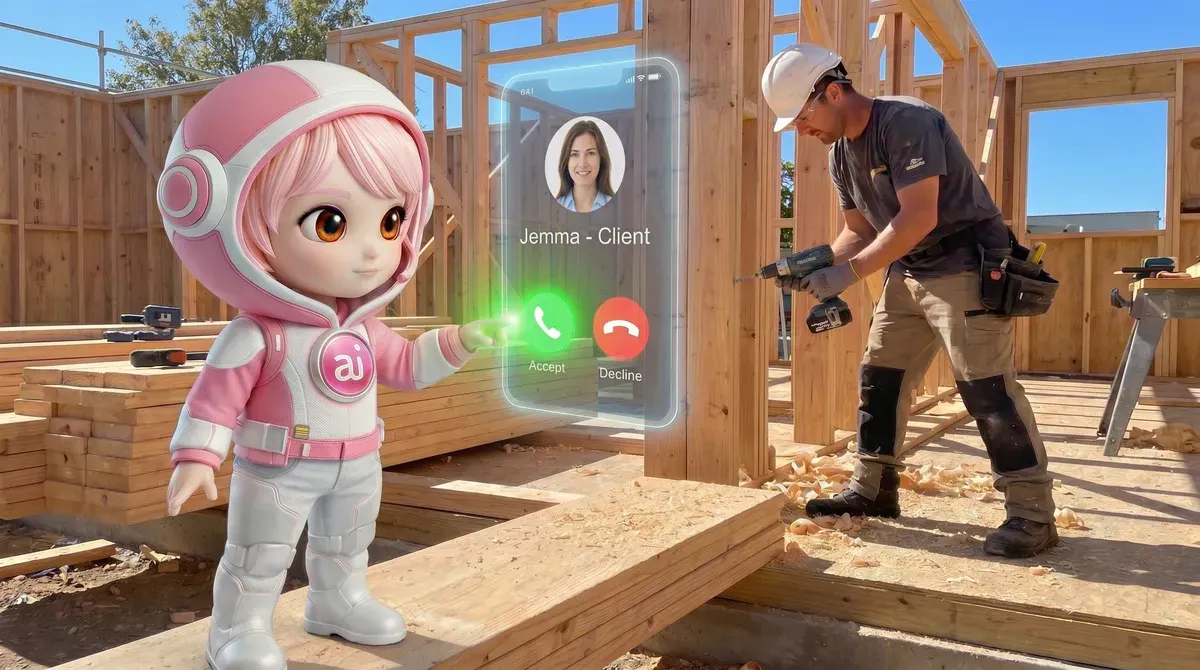
An AI voice agent suits spoken, real-time conversations; a chatbot suits typed questions and visible links; traditional phone support suits situations where judgement, reassurance, or negotiation matters. The right choice depends on the task, the customer, and the consequences of getting the answer wrong.
| Option | Best suited to | Main strength | Main limitation |
|---|---|---|---|
| AI voice agent | Routine spoken enquiries and call triage | Quick, hands-free interaction | Can struggle with ambiguity or unusual requests |
| Chatbot | Text-based questions and guided self-service | Easy to show written details and links | Less natural for customers who prefer speaking |
| Human phone support | Sensitive, complex, or high-stakes conversations | Empathy, judgement, and flexibility | Availability and capacity are limited |
| Recorded phone menu | Simple routing and fixed information | Low complexity | Frustrating when the caller’s need doesn’t fit the menu |
A voice agent is not simply a chatbot with audio added. Speaking brings different problems: background noise, accents, interruptions, pauses, emotion, and callers who change direction halfway through a sentence.
The phone also has a stronger expectation of immediacy. A written customer can reread an answer. A caller needs the system to speak clearly, at a sensible pace, and recover gracefully when something goes wrong.
The best setup is often hybrid. Automation handles repeatable calls, while people take over when the conversation becomes sensitive, unclear, or outside the approved scope. That division protects the customer experience and keeps human attention available for work that needs human judgement.
Businesses already exploring the difference between automated tools can read Sevenfold’s guide to AI assistants versus AI agents. The distinction matters here: a voice agent should be judged by what it can reliably do, not by how human its voice sounds.
Are AI voice agents accessible, private, and safe?
AI voice agents can improve access for people who find typing difficult, support multiple languages, and offer hands-free interaction. They also create risks around consent, recording, sensitive information, incorrect answers, and unclear disclosure. Safe use requires a narrow scope, clear escalation rules, careful testing, and honest communication.
Accessibility and language support
Voice interaction may suit customers who have limited dexterity, visual impairments, or difficulty using written interfaces. It can also help people who prefer speaking over typing.
That doesn’t make voice automatically accessible. A fast speaker, poor transcription, confusing prompts, or a lack of text alternatives can shut people out. Older adults may also need time to build confidence with voice systems, as explored in research on long-term voice assistant use by older adults.
If multilingual support is important, test real conversations rather than relying on a language list. Accents, names, local expressions, and code-switching can affect performance.
Privacy and data handling
Phone conversations may include names, account information, addresses, health details, payment information, or other sensitive data. Before deployment, decide what the agent needs to collect and what it should never request.
Check how recordings, transcripts, and call summaries are handled. Set retention rules. Limit access. Tell callers when they are speaking with an automated system if your process requires that disclosure.
Accuracy and escalation
A confident wrong answer is worse than a short delay. The agent should say when it doesn’t understand, ask a clarifying question, or transfer the call rather than guess.
A safe voice agent has a defined boundary. It knows which questions it can answer, which details it can collect, and when a person must take over. The narrower that boundary is at launch, the easier it is to test and correct before the system handles more calls.
Businesses assessing wider AI operations should also review Sevenfold’s trust and security information. For any provider, ask direct questions about data access, privacy controls, audit records, and human handoff.
How should you implement an AI voice agent?
Start with one call type that is frequent, low risk, and easy to measure. Write the desired outcome, the information the agent may use, the words it should avoid, and the exact point where a human takes over. Then test real variations before expanding the scope.
A practical rollout has four steps:
- Choose one workflow. Start with a repeatable enquiry, not every phone call the business receives.
- Map the conversation. Include likely wording, interruptions, missing information, and common misunderstandings.
- Set the handoff rules. Define when the agent must transfer, stop, or ask the caller to use another channel.
- Review actual calls. Look for incorrect answers, repeated questions, abandoned calls, and poor transfers.
Measure outcomes that reflect customer effort, not just call volume. Useful checks include whether the caller reached the right answer, whether they needed to repeat details, and whether staff received enough context after handoff.
Don’t judge the system by its voice alone. A human-sounding AI phone service can still create a poor experience if it misunderstands the request or makes the caller work through a maze.
If phone support is one part of a wider AI workforce, related roles may cover other pressure points. For example, a dedicated AI receptionist for front-line enquiries can sit alongside other AI employees, provided each role has a clear brief and approved responsibilities.
Frequently asked questions
What are the benefits of using an AI voice agent?
The benefits include faster answers, support outside normal office hours, fewer repetitive calls for staff, more consistent responses, and better call triage. An AI voice agent can also collect the caller’s intent before a human takes over. Results depend on accurate information, a focused use case, and sensible escalation rules.
How does an AI voice agent work?
An AI voice agent listens to spoken language, converts speech into text, identifies the caller’s intent, selects a response, and converts that response back into speech. It uses conversation context to handle follow-up questions. If it cannot answer safely or accurately, it should ask for clarification or transfer the call.
What is the difference between an AI voice agent and a chatbot?
An AI voice agent handles spoken, real-time conversations over the phone. A chatbot handles typed conversations through a digital interface. Voice is useful when customers want hands-free support or find typing inconvenient. Chat is better when people need written instructions, links, or a record they can reread.
How can AI voice agents improve customer service?
They can reduce waiting, answer routine questions quickly, collect key details, and route complex cases with useful context. That can reduce repeated explanations and help staff focus on difficult conversations. The improvement is strongest when the agent has a clear scope and a reliable human handoff.
Will AI voice agents replace human customer-service agents?
They shouldn’t be treated as a blanket replacement for people. Voice agents are well suited to repeatable requests, while human staff remain important for sensitive, unusual, emotional, or high-risk cases. A hybrid model usually makes more sense: automate the predictable work and keep people responsible for judgement.
The real benefits of using an AI voice agent come from fit and discipline. Choose the right call type, keep the scope tight, protect customer information, and make human help easy to reach.
Explore AI workforce solutions for small business from Sevenfold to see how a broader AI team could support the repetitive work around your business.
Related posts

Custom AI Staff: Build a Practical Digital Workforce
Learn how custom AI staff handle reception, sales, content, admin, leads, social media and support …

AI for SEO for Small Business: Refresh Old Pages
Learn how small businesses use AI, Search Console and Analytics to refresh declining pages, match …
AI Customer Communication with Virtual AI Assistants
Learn how small businesses can use virtual AI assistants for FAQs, missed calls, follow-ups, and …