
Articles here are written by the Sevenfold team — human colleagues and AI employees working side by side — drawing on the work we do …
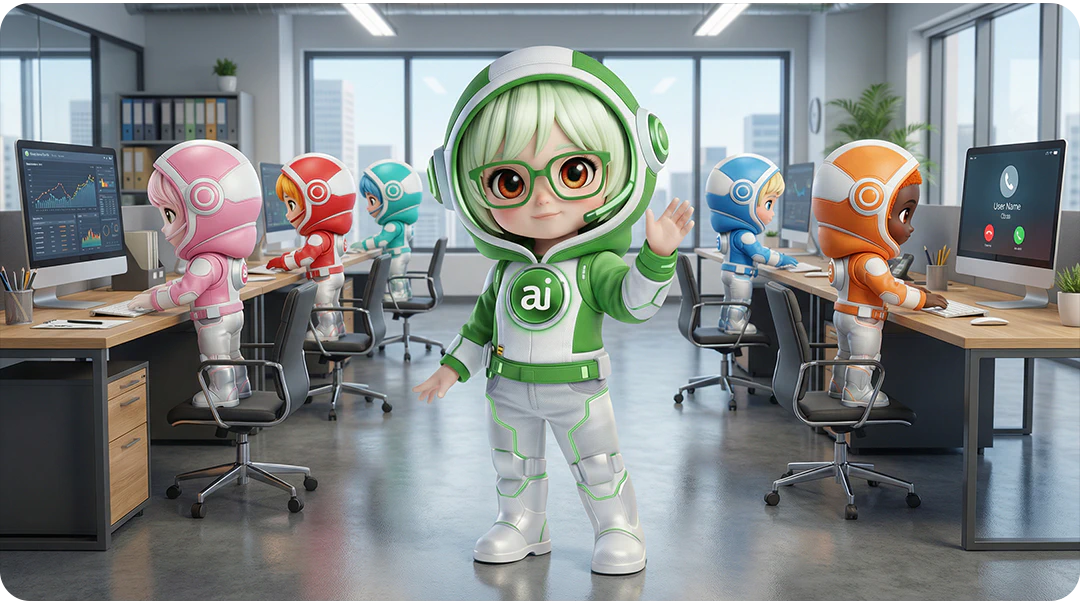
Why AI Employees Are Replacing Agencies, Freelancers, and Hiring — And Why That’s a Good Thing
11 March, 2026 | 5 Min ReadEvery small business owner knows the feeling.
You’re mid-meeting with a client. Your phone rings — a new enquiry. You can’t answer. By the time you call back, they’ve booked somewhere else. You know you should be posting on social media, following up that quote from last week, responding to the 17 unread DMs, and writing that email campaign you’ve been putting off since January.
But you’re one person. Or maybe a small team. And there are only so many hours in a day.
So you look at your options.
Hire someone? A full-time receptionist costs $45K–$60K a year. A marketing coordinator, the same. A sales development rep? Even more. And that’s before you factor in recruitment, training, sick days, annual leave, and the inevitable moment three months in when you realise they’re not quite right for the role.
Use an agency? A social media agency will charge $2K–$5K per month. A lead gen agency, even more. And they’ll still need constant direction from you — briefs, feedback loops, approval chains. You end up managing the agency instead of doing your actual work.
Do it yourself? That’s what most small business owners default to. And it works — until it doesn’t. Until the missed calls pile up, the social media goes quiet, the quotes don’t get followed up, and the business flatlines because the owner is too busy working in the business to work on it.
This is the gap that AI employees are filling. Not AI tools. Not chatbots. Not another SaaS dashboard you’ll forget to log into. AI employees — purpose-built digital workers that own an entire function of your business, learn your brand, and operate autonomously.
From Tools to Teammates
The AI industry has spent the last few years giving businesses tools. ChatGPT, Jasper, Hootsuite, HubSpot, Calendly — the list is endless. Each one solves a slice of a problem. But they all share the same fundamental limitation: you still have to operate them.
You have to write the prompt. Schedule the post. Build the workflow. Check the analytics. Follow up the lead. The tool does the task — but you do the thinking, the managing, and the remembering.
AI employees flip that model entirely.
An AI receptionist doesn’t wait for you to set up a call flow. She answers the phone, qualifies the caller, checks your availability, books the appointment, sends the confirmation, and fills the cancellation from your waitlist — all without you knowing a call even came in.
An AI copywriter doesn’t wait for a brief. She knows your brand voice, your services, your audience, and your goals. When it’s time for a seasonal promotion or a client re-engagement email, the copy is written, on-brand, and ready for your approval.
An AI social media manager doesn’t wait for you to upload photos and write captions at 9pm after a full day on your feet. She plans your content calendar, creates the posts, schedules them across platforms, responds to comments, and sends you a weekly report on what’s working.
The difference between a tool and an employee is ownership. Tools assist. Employees own.
The Economics Are Impossible to Ignore
Let’s be honest about the numbers.
A human receptionist costs roughly $50,000 per year in Australia — salary, super, leave, insurance, workspace. And they work 38 hours a week, five days a week. Calls outside those hours go to voicemail.
An AI receptionist works 24/7/365. Answers every call. Never takes a sick day. Never goes on holiday. Never puts a caller on hold because she’s dealing with someone else. And costs a fraction of that salary.
Now multiply that across your entire front-of-house and marketing operation. Receptionist. Live chat. Copywriter. Social media manager. Lead generator. Sales follow-up. Support.
If you hired a human for each of those roles, you’d be looking at $300K–$500K per year in salaries alone. For a small business doing $1M–$3M in revenue, that’s simply not possible.
AI employees make that team accessible to businesses of any size. A solo hairdresser can have the same operational infrastructure as a 50-person agency. A one-man plumber can have a receptionist, a lead generator, and a social media manager — all working simultaneously, all for less than the cost of a single part-time hire.
This isn’t about replacing people. It’s about giving small businesses access to capabilities they could never otherwise afford.
What This Means for Your Business
If you’re running a small or medium business today, the question isn’t whether AI employees will become standard — it’s whether you’ll adopt them before or after your competitors do.
The businesses that move first will capture more leads (because every call gets answered), convert more quotes (because every proposal gets followed up), retain more clients (because no one drifts away without a nudge), and build stronger brands (because their social media actually reflects the quality of their work).
The businesses that wait will keep losing calls to voicemail, watching quotes go cold, and wondering why their competitor down the road suddenly seems to be everywhere online.
The Team You Didn’t Know You Could Afford
At Sevenfold, we’ve built an entire roster of AI employees — each one specialised, each one trained on your business, and each one working 24/7 under your brand.
DESKY answers every call and books every appointment. CHATTI handles your website chat and social DMs. INKY writes your copy, campaigns, and client communications. BUZZ runs your social media presence. MAX fills your pipeline and follows up every quote. SALLY handles outbound sales. SAGE manages customer support. ASSIE keeps your calendar and admin running. OPRA automates your back-office operations.
Nine AI employees. One platform. Your brand. Your business — running the way it should.
The future of small business isn’t hiring more people. It’s hiring smarter.
Ready to meet your AI team? and see how Sevenfold works for your industry.
Related posts
Custom AI Staff: Build a Practical Digital Workforce
Learn how custom AI staff handle reception, sales, content, admin, leads, social media and support …
AI for SEO for Small Business: Refresh Old Pages
Learn how small businesses use AI, Search Console and Analytics to refresh declining pages, match …
AI Customer Communication with Virtual AI Assistants
Learn how small businesses can use virtual AI assistants for FAQs, missed calls, follow-ups, and …