
Articles here are written by the Sevenfold team — human colleagues and AI employees working side by side — drawing on the work we do …
AI Agents: How Sevenfold Builds a Practical AI Workforce
01 September, 2026 | 10 Min ReadAI agents are software workers that take a goal, work through related tasks, and produce an outcome with less step-by-step direction from you. Sevenfold turns that idea into a practical AI workforce, with agents for copywriting, social media, lead generation, customer support, and executive assistance.
Key takeaways
- Choose an AI agent based on a business task, not a vague promise of automation.
- AI agents can follow instructions, use business context, and work through repeatable processes.
- Start with one clear role, provide your brand and operating instructions, then review the output.
- Sevenfold helps you select, set up, deploy, review, and scale a team of AI employees.
What are AI agents?
AI agents are software systems that work toward a defined goal by interpreting instructions, deciding what needs to happen next, and carrying out a sequence of tasks. A chatbot usually responds to a prompt. An agent can take a broader assignment, follow business rules, and produce work across several steps.
That difference matters.
If you ask a chatbot to write one email, you receive one response. If you give an AI email reply agent a clear role and your preferred tone, it can help handle recurring email work according to those instructions. The same idea applies to an AI receptionist, AI lead generator, SEO content writer, or AI support manager.
An AI agent works best when the task has a repeatable objective, clear boundaries, and a result you can review. It needs a defined job, useful business context, and instructions for handling missing information. Give it a vague role and you’ll spend your time correcting vague work.
AI assistants and AI agents overlap, but they aren’t identical. An assistant often helps you complete a task when you ask. An agent is set up around a role or outcome and can work through connected tasks with more independence.
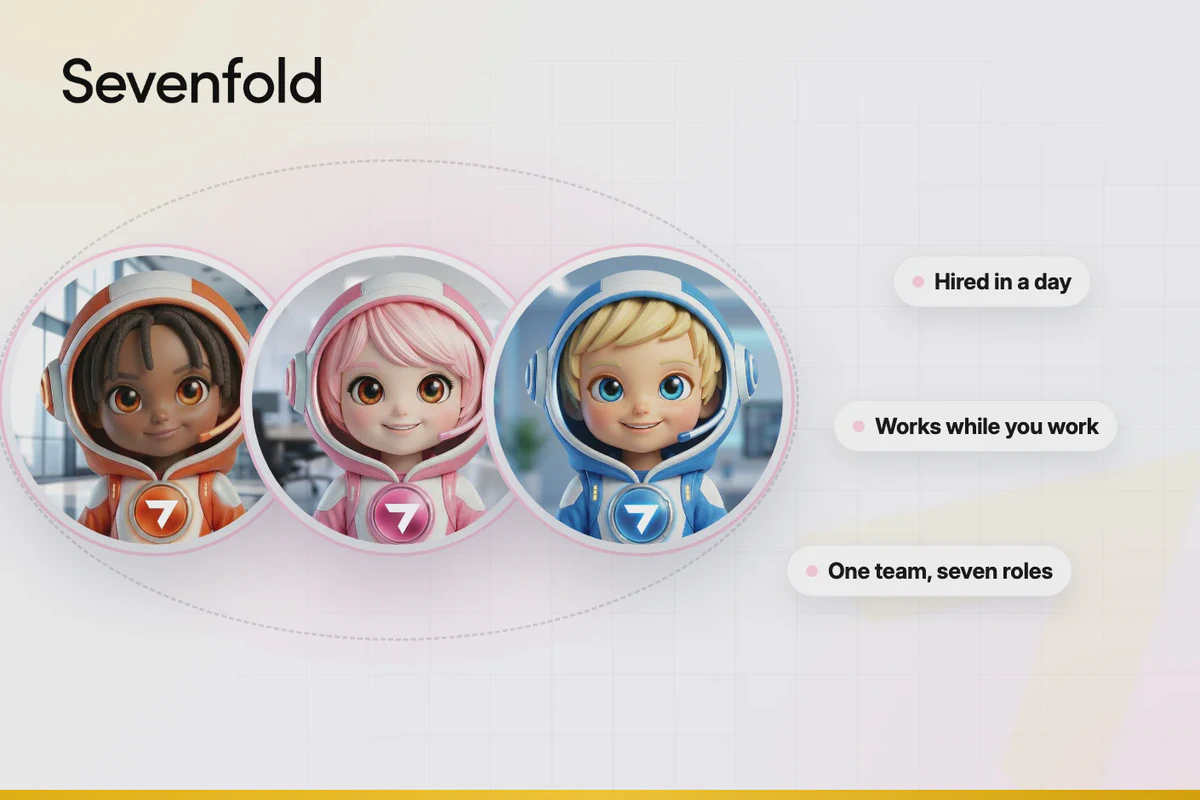
Sevenfold provides a well-trained AI workforce built around those roles. You select the AI employees that match your needs, tell them about your business, and give them your brand tone and working preferences.
How do AI agents work?
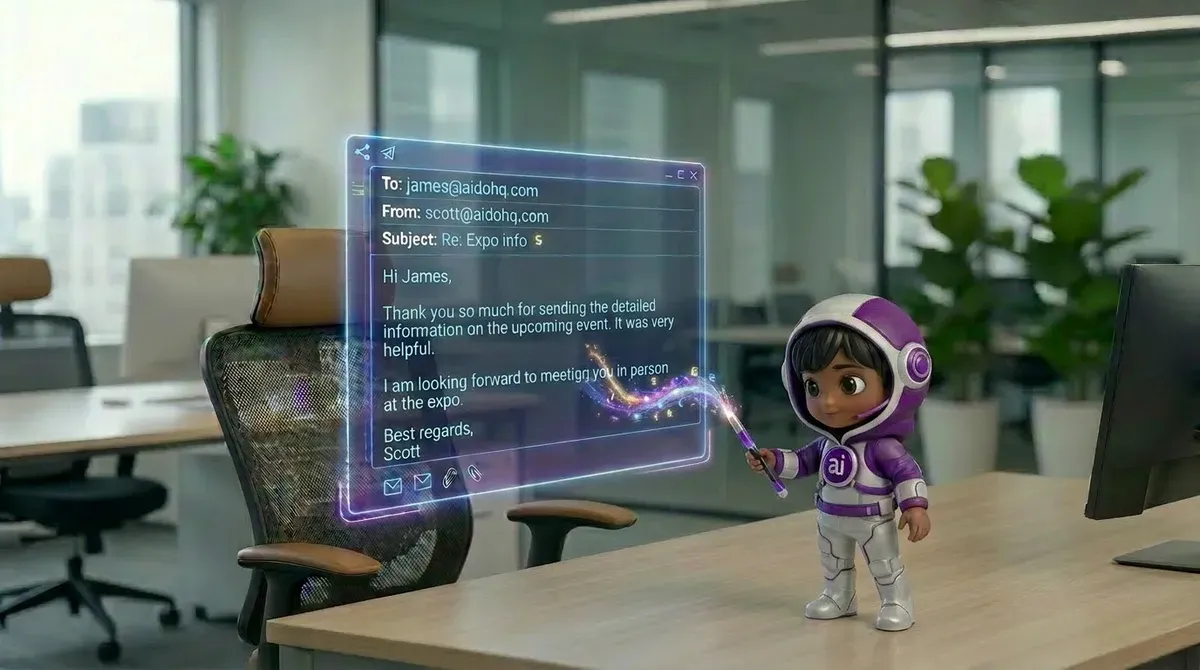
AI agents work by turning a goal into smaller actions, using the instructions and information available to them, then producing an output for review or use. Their performance depends on the role definition, business context, task instructions, and controls around the work.
A typical agent process looks like this:
Receive a goal
The agent is given a task, such as preparing a blog, responding to a customer query, or following up with a prospect.Interpret the instructions
It considers the role, tone, rules, and information you’ve provided.Plan the work
The agent breaks the assignment into practical steps. A content agent may identify the subject, structure the article, and write in the required voice.Produce an outcome
It creates the copy, response, plan, or other work product.Review and adjust
You check the result, refine the instructions if needed, and improve how the agent handles future work.
The words “memory” and “reasoning” can make agents sound mysterious. For a business owner, the practical questions are simpler: What information can the agent use? What instructions does it follow? What should it do when information is missing? Who reviews the result?
Keep those questions visible.
Research from AISI examining 177,000 AI agent tools shows how broad agent use has become. That variety makes role design important. An agent set up for customer support needs different instructions from one writing SEO content.
Sevenfold’s setup follows a straightforward path:
| Step | What happens | Why it matters |
|---|---|---|
| Choose your AI agents | Select the AI employees that match your business needs | You start with a defined role instead of a blank system |
| Set them up | Tell the agents about your business, brand tone, and preferences | The work has useful context from the start |
| Deploy, review, and scale | Launch the team, monitor results, and adjust as your business grows | You can build on what works as your workload changes |
The quality of an AI agent’s work starts before the first task is assigned. A clear role, accurate business information, and a review process give the agent a fair chance to produce useful work. Those controls also make mistakes easier to spot.
What can AI agents do for a business?
AI agents can handle repeatable work across content, marketing, sales, customer support, and administration. The strongest use cases have a clear purpose, a regular workflow, and an output you can check. They take work off your plate while leaving business decisions with you.
Sevenfold’s AI workforce includes roles for common business tasks:
- Copywriting: Produce blogs, emails, and ad copy in your brand voice.
- Social media: Plan, write, schedule, and monitor your social presence across channels.
- Lead generation: Support prospecting, outreach, and follow-ups so opportunities don’t sit untouched.
- Customer support: Help resolve queries, manage tickets, and support customers when your team is offline.
- Executive assistance: Take on recurring administrative work that needs organised follow-through.
- Sales support: Give sales-focused work a defined owner alongside lead generation and follow-up.
A small business might use an AI SEO content writer to prepare a first draft, then review the facts and approve the final version. A service business may use an AI lead generator to support prospecting and follow-up. A growing team may assign customer queries to an AI support manager before a human steps in for a more complex issue.
The work needs an owner.
The practical value of an AI agent comes from giving routine work a reliable owner. Sevenfold’s agents are organised around business roles, so you can choose an AI employee for the job rather than asking one general tool to handle everything. That makes the output easier to direct and review.
You can also build around a specific business process. For example, an agent may be responsible for maintaining a consistent writing voice, while another handles social content. Our guides on using AI for social media posts in your brand voice and building a small-business SEO content workflow cover those tasks in more detail.
Should you use one AI agent or a full AI workforce?
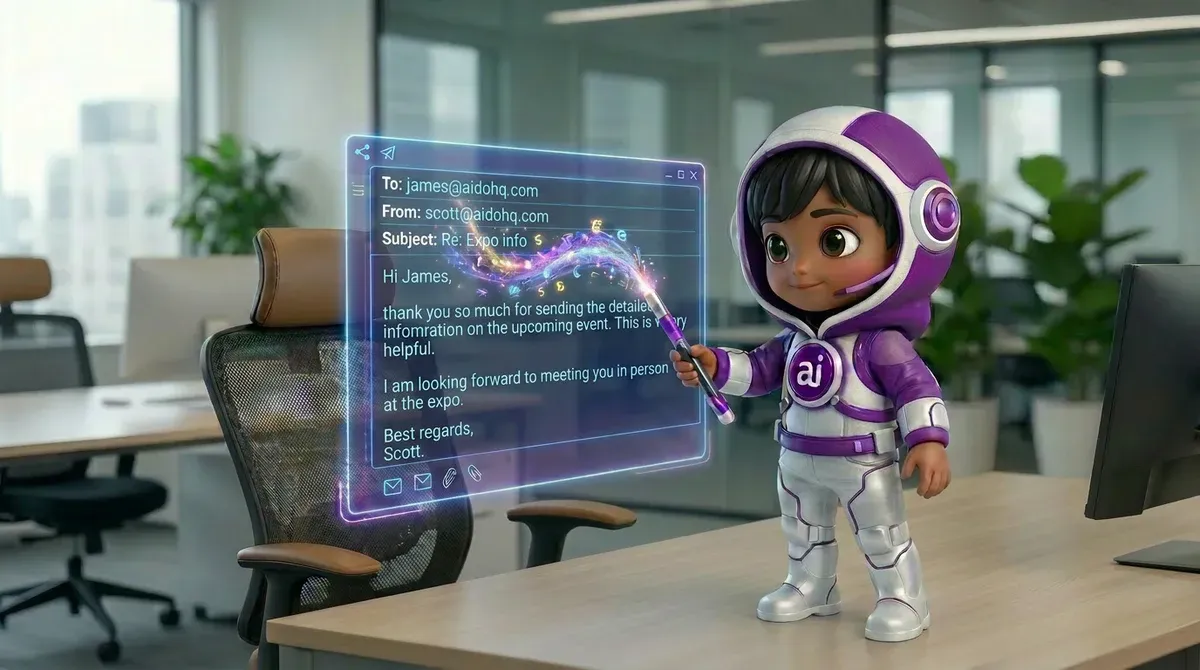
One AI agent suits a single bottleneck. A full AI workforce suits a business with several recurring tasks across marketing, sales, support, and administration. Start with the role tied to your biggest time drain, then add other agents once the first workflow is working properly.
A single agent can be the right choice when you need help with one job. You may want an AI receptionist to support customer contact or an SEO content writer to help maintain your publishing schedule.
A multi-agent setup gives separate roles to separate jobs. Each agent can have its own instructions, tone, and expected output. That makes review easier because you’re judging an agent against a specific responsibility.
| Approach | Best fit | What to watch |
|---|---|---|
| One AI agent | One clear, repetitive business task | Keep the role narrow and the instructions specific |
| Several AI agents | Multiple departments or recurring workflows | Give each agent clear ownership |
| A complete AI workforce | A business that wants support across several functions | Set priorities and review outputs regularly |
Don’t create a large team before you’ve defined the work. Start with a task you already understand. Write down what a good result looks like, what information the agent needs, and which situations require human attention.
A useful AI workforce grows from proven roles, not from a long list of possible features. Sevenfold lets you select agents that match your needs, set them up with your business information, then review and scale the team as your workload grows.
Read more about AI workforce solutions for small business if you’re deciding which recurring tasks should have their own AI employee.
What are the risks and limits of AI agents?
AI agents still need clear instructions, sensible boundaries, and human review. They can misunderstand context, produce incorrect information, or follow a poor instruction consistently. Privacy, access, reliability, and accountability also need attention before an agent handles important business work.
An agent should never be treated as a replacement for judgement in sensitive situations. Review its work where accuracy, customer trust, legal obligations, or business reputation are involved.
Good operating habits include:
- Give the agent only the information it needs for the job.
- State what it must do when it doesn’t know an answer.
- Review early outputs before relying on the workflow.
- Keep human approval for decisions that carry serious consequences.
- Update instructions when your business, offers, or policies change.
- Check whether the output matches your brand and customer expectations.
The NIST analysis of security considerations for AI agents highlights the need to examine security risks as agent systems become more capable. The issue isn’t only whether an agent can complete a task. You also need to know what information it can access, what actions it can take, and how mistakes are found.
Sevenfold states that your business data stays yours. You can also review the Sevenfold Trust and Security Centre for the business’s published information.
The safest starting point is a contained workflow with a clear review step. Let an agent support a defined role, inspect the work, and improve the instructions before expanding its responsibilities. Autonomy should grow from evidence, not enthusiasm.
How should you choose the right AI agents?
Choose AI agents by matching a specific business problem to a defined role. Look at the work’s frequency, the amount of repetition, the information required, and the cost of a mistake. Then select an agent that fits the job and test its output against real examples from your business.
Start with these checks:
What work keeps coming back?
Repeated content, follow-ups, customer queries, and routine administration are sensible places to look.What should the agent produce?
Define the output in plain language. “Help with marketing” is too broad. “Prepare a weekly set of social posts in our brand voice” gives the role a usable target.What does the agent need to know?
Provide your business details, tone, preferences, and boundaries.What needs human approval?
Decide which work can move forward and which work must be checked first.How will you judge the result?
Use practical standards: accuracy, tone, completeness, and whether the work saves you time without creating extra fixing.
Sevenfold makes this process role-based. Its AI employees include named business functions such as AI Receptionist, AI SEO Content Writer, AI Lead Generator, AI Social Media Manager, AI Sales Executive, AI Support Manager, and AI Executive Assistant.
That gives you a clearer starting point than a blank prompt box.
A useful test is simple: could you explain the job to a new staff member in a page or less? If you can describe the input, process, output, and handoff, the task may suit an AI agent. If every request is different, keep the role narrow until you understand the pattern.
Frequently asked questions
Are AI agents the same as chatbots?
No. A chatbot generally responds to a conversation or prompt. An AI agent can work toward a defined objective across several steps, using its role instructions and business context. Some agents may communicate through chat, but their job is broader than producing a single conversational reply.
Can AI agents replace employees?
AI agents can take on defined, repeatable tasks, but they don’t remove the need for human judgement. You still set priorities, check important work, handle sensitive decisions, and maintain the standards customers expect. Sevenfold positions its agents as AI employees within a wider workforce, supporting the people running the business.
How do I set up Sevenfold AI agents?
You choose the AI agents that fit your needs, tell them about your business, and provide your brand tone and working preferences. You can then deploy the team, review results, and scale the roles as your business grows. The starting point is a clear job, not a general request for automation.
What should I automate first?
Start with work that happens often, follows a clear pattern, and takes time away from higher-value business decisions. Content drafting, social media work, lead follow-up, customer queries, and routine administration can be sensible starting points. Choose one role, review the output, and expand from there.
Are AI agents fully autonomous?
Some systems are designed to act with little human input, but full autonomy isn’t the right target for every business task. A Gartner survey on fully autonomous AI agents reflects the caution organisations still have around this approach. Clear limits and review remain sensible.
AI agents work best when you give them a real job, useful context, and clear limits. Sevenfold gives you a practical way to build that team, starting with the AI employees your business needs now.
Related posts
AI Email Reply Agent: What It Can Handle and When to Hand Off
Learn how an AI email reply agent can automate, from FAQs and lead follow-up to scheduling, and when …

AI Agents Explained: How They Work and Sevenfold’s AI Workforce
Learn what AI agents are, how they use knowledge, tools and feedback, and how Sevenfold builds …

AI Workforce Solutions for Small Business: Managing AI Employees
Learn how small businesses manage AI employees with clear owners, human review, useful metrics, …